


Why Meta Glasses — AKA "Pervert Glasses" — Should Give You Pause
Why Meta Glasses — AKA "Pervert Glasses" — Should Give You Pause

Molly Simms Thu, August 20, 2026 at 9:41 PM UTC
5
Why Meta Glasses — AKA "Pervert Glasses" — Should Give You Pause
They're all over Instagram, TikTok, or anywhere online, really: Videos filmed from the point of view of someone walking down the street, at a concert, or entering a restaurant, all the while chatting with strangers. Often, you'll notice those same strangers talking unguardedly, as if they have no idea they're being filmed. That's because they probably don't: They're being secretly recorded through eyeglasses without their permission.
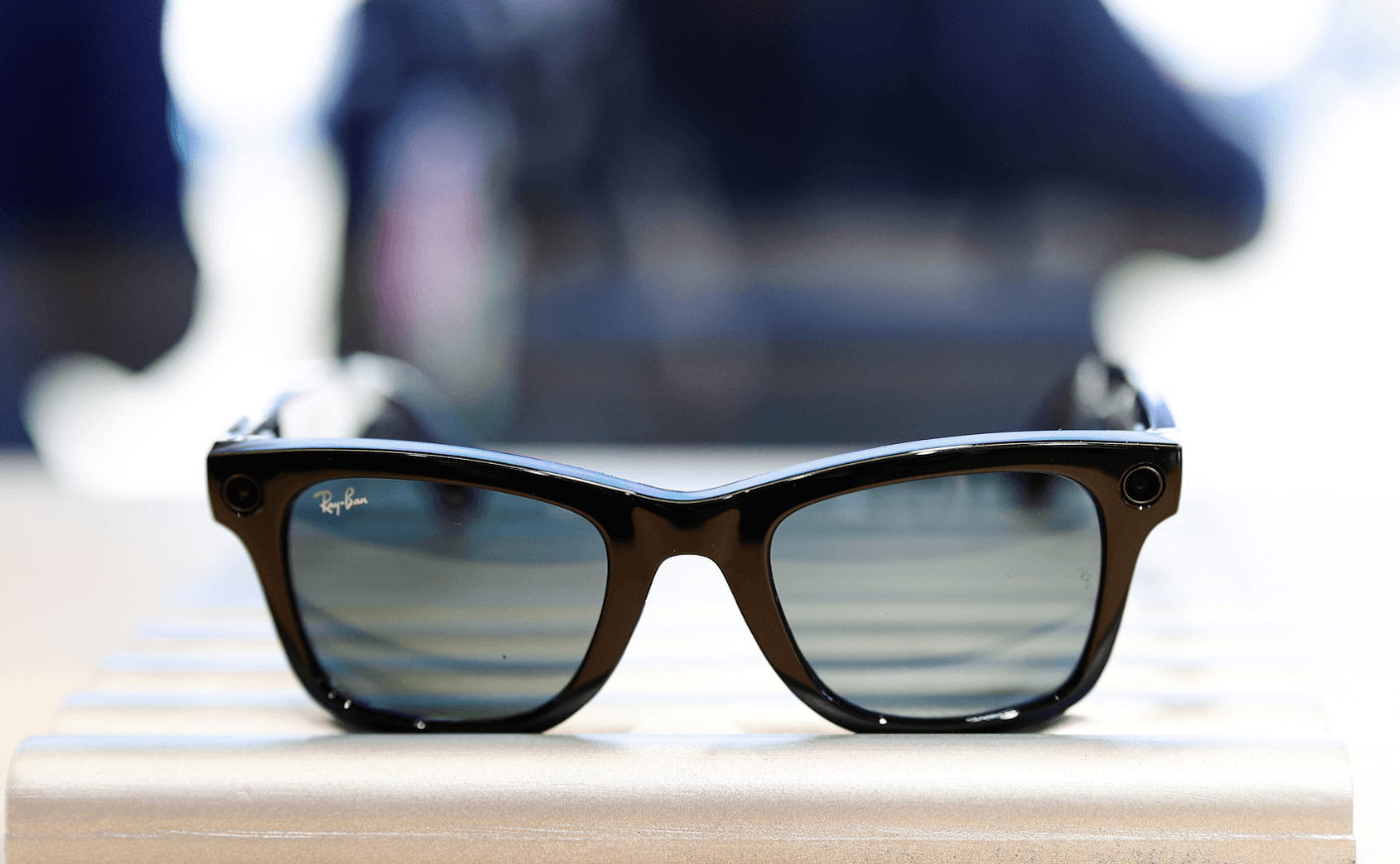
Meta glasses, which can take high-resolution photos and videos from the wearer's POV, were heralded as revolutionary by some tech experts when they first became popular in late 2023. Back then, many saw the glasses as a convenient and unobtrusive way to film what you see — and a stylish one, thanks to the fact that they were modeled in the classic-cool Ray Ban Wayfarer shape. But privacy experts were aghast: This tech was not only a way to covertly film those around you, it was ripe for abuse by the wearer, who could get away with taping people without their consent. (There's a reason they're widely nicknamed "pervert glasses.")
To understand the privacy issues swirling around this controversial tech, we checked in with Woodrow Hartzog, a law professor at Boston University who's an expert on the intersection of privacy and technology. He explained how Meta glasses may have eye-popping implications on our freedoms — and why you may want to think twice about hitting the "like" button on all those POV videos on your feed.
Smartphones have allowed us to photograph strangers for many years. So, as many people have asked, why are Meta glasses any different?
Woodrow Hartzog: I think one of the most misguided arguments about using these glasses is that it's just like recording on your phone. But that glosses over the social dimensions of how people perceive being viewed, and how difficult it is to film with your phone without being detected — versus how easy it is to film people without their consent with glasses. The most important design feature that differentiates phones from glasses is that they hang on your face constantly.
It seems like a trivial difference between Meta glasses and taking your phone out of your pocket, pointing it at someone, and pressing the button. But actually that's an important movement that keeps people from filming all the time. We're accustomed to seeing glasses on people's faces, so it's not always clear whether we're being filmed. And our whole social fabric is conditioned around not thinking that we are being watched when someone has glasses on. But if you see someone with a phone out and they're pointing it directly at you, then we can understand what's happening. And that difference totally separates the two technologies.
We're already seeing videos where people are obviously using these glasses to film people without their consent or knowledge. And it's cold comfort and almost laughable that the defense is, "Oh, it has a light on when it's recording, and so therefore it's got privacy protection built in." It's trivially easy to disable that light and there's actually a whole sub-economy dedicated to selling devices that cover it up. And even if the light is on, we're assaulted by stimuli in public spaces everywhere we go. Who's to say we're going to notice a small light when we're 30 feet away from someone?
If tech companies have their wish, these things will be on everybody's faces all day. So does that mean that each time I walk outside of my house, I have to get into a verbal altercation with every person who's filming me without my consent? That's no way to live life. Do we want our daily existence to be that kind of constant negotiation?
What happens to us socially if we have to constantly wonder whether the person we're talking to is recording us?
Life is hard as it is, before adding this to our daily burden. It's also just sort of anti-social in that it encourages such hostile behavior towards each other. We also know that women feel the brunt of this sort of harassment first. We knew that this tool would be used to harass women the second it was created, and that was one of the first uses that we saw it put to.
Yes, footage is being shared of everything from men approaching women via pick-up artist techniques — to instruct men on how to meet girls — all the way up to sexual encounters. Is this new technology creating a fresh type of harassment or is this an age-old problem, meaning voyeurism and non-consensual recording, that's just more scalable now?
That's exactly right. Obviously, there have been creeps in the world for a long time and you don't need technology to be one. But these glasses make those transgressions a lot easier and encourage them at scale, because they've lowered the cost of that kind of monitoring. If you make a really harmful — but to a certain group of people desirable — practice easier to do, they're going to do a lot more of it.
Advertisement
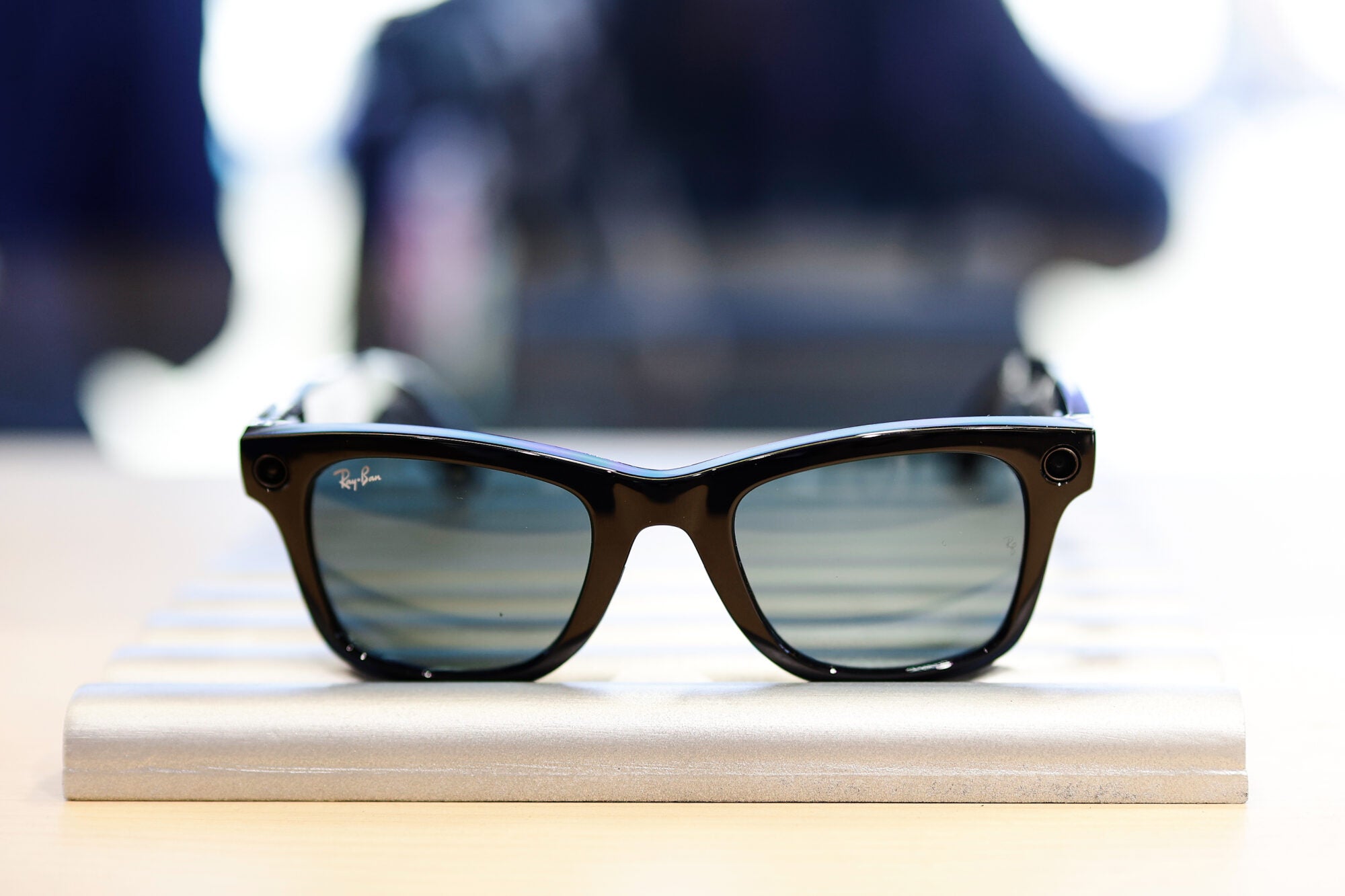
The Ray-Ban Meta Wayfarer Gen 2 smart glasses display at the Meta exhibit in Barcelona, Spain, on March 5, 2026. (Photo by Joan Cros/NurPhoto via Getty Images)Obviously I expect less privacy when I'm on a public street than I do in my living room. But people are wearing these glasses in the gym and doctor's offices and bars and other semi-private places, where the line is blurred. Do our current privacy laws adequately account for a device that can be everywhere?
No, our current privacy laws fail us in a lot of different ways. Some of the most prominent laws are built around the idea — which was maybe justified in a world without such ubiquitous digital surveillance — that there's no such thing as privacy in public. In other words, you shouldn't be expecting privacy in public spaces, because everyone can see you. But that doesn't address the distinction between someone seeing you for a few seconds and then that interaction disappearing into the ether, and that interaction being recorded and available to be used against you for the rest of your life.
Our laws are also not very good at targeting the design of these tools. But the design tends to indicate how they're going to be used — and we regulate design in all other sorts of ways. The reason that planes stay in the sky and cars are safe is that we regulate how they're built.
So rather than putting the burden on individuals to opt out of being recorded, should we be regulating how these devices are designed in the first place?
We tend to overburden individuals' responsibility to consent to things. And that's how we wound up in the hell that we all exist in, where every time we log onto a website, banners pop up and say, "Is this OK?" And you have to press the "I agree" button a thousand times. We've made the mistake of thinking that privacy is about controlling your own personal information. Certainly having autonomy over how to live your life is vital, but that's not the only relevant factor for privacy law.
It asks far too much of us to say that companies can do whatever, so long as you agree to it. We need better rules to protect people no matter what they choose. Companies have been very good at saying, "Well, we respect your privacy because we give you control. You can say no if you want." But that ignores all the ways in which it's hard to meaningfully exercise that control, like maybe it's awkward or you get worn down over time, or maybe you have so many choices that it's overwhelming.
People found out that Meta was developing a code that would allow for their glasses to have facial recognition. What changes once the glasses can tell you not just, "There's someone in front of you," but who they are?
I've written a lot about facial recognition technology — I've publicly advocated for an outright ban on it. The reason why is that it's the most dangerous surveillance technology ever created, because it's the perfect tool of oppression. If you want to ensure that anyone has to do exactly what you want — if you're a powerful government or a powerful organization or even just a powerful person — you couldn't come up with a better tool.
Our faces are completely unique, and they're also difficult to hide in public society. There's really nothing quite like your face that's so core to your identity as a person. I tell my students, "When you think of me, you're not thinking of my elbow or my shoulder, you're thinking of my face."
The idea — that your face becomes a tracking beacon that can identify us everywhere we go — creates a cascade of nightmare scenarios whereby we can never violate a norm without being "tagged." You jaywalk one day, or run hastily down the street, or you awkwardly dance at a nightclub, and the next thing you know, you've been tagged and that's been preserved forever. We've known for a long time that surveillance creates chilling effects and pressures us to conform. Humans aren't meant to live that way, and we don't have that sort of risk calculus built into our brains.
Why do you think regulating facial recognition tech isn't enough?
It opens you up to being shamed for literally everything that you do throughout your entire life. And that's the opposite of freedom — that's oppression. The fact that it's a plug-and-play technology, and can be implemented into all these other existing surveillance tools, should be absolutely terrifying to people. All someone has to do is snap their fingers, and you can never go anywhere again without being monitored.
That's not the future that I think that anybody wants. So we need significant new bright-line rulesnow, in order to prevent that future. Because without them, the slow creep toward more surveillance will always lead us in that direction.
The post Why Meta Glasses — AKA "Pervert Glasses" — Should Give You Pause appeared first on Katie Couric Media.
Source: “AOL Breaking”
