


What is the Stanford Prison Experiment — and why did Netflix turn it into a reality show?
What is the Stanford Prison Experiment — and why did Netflix turn it into a reality show?

Britt HayesWed, October 21, 2026 at 4:23 PM UTC
0
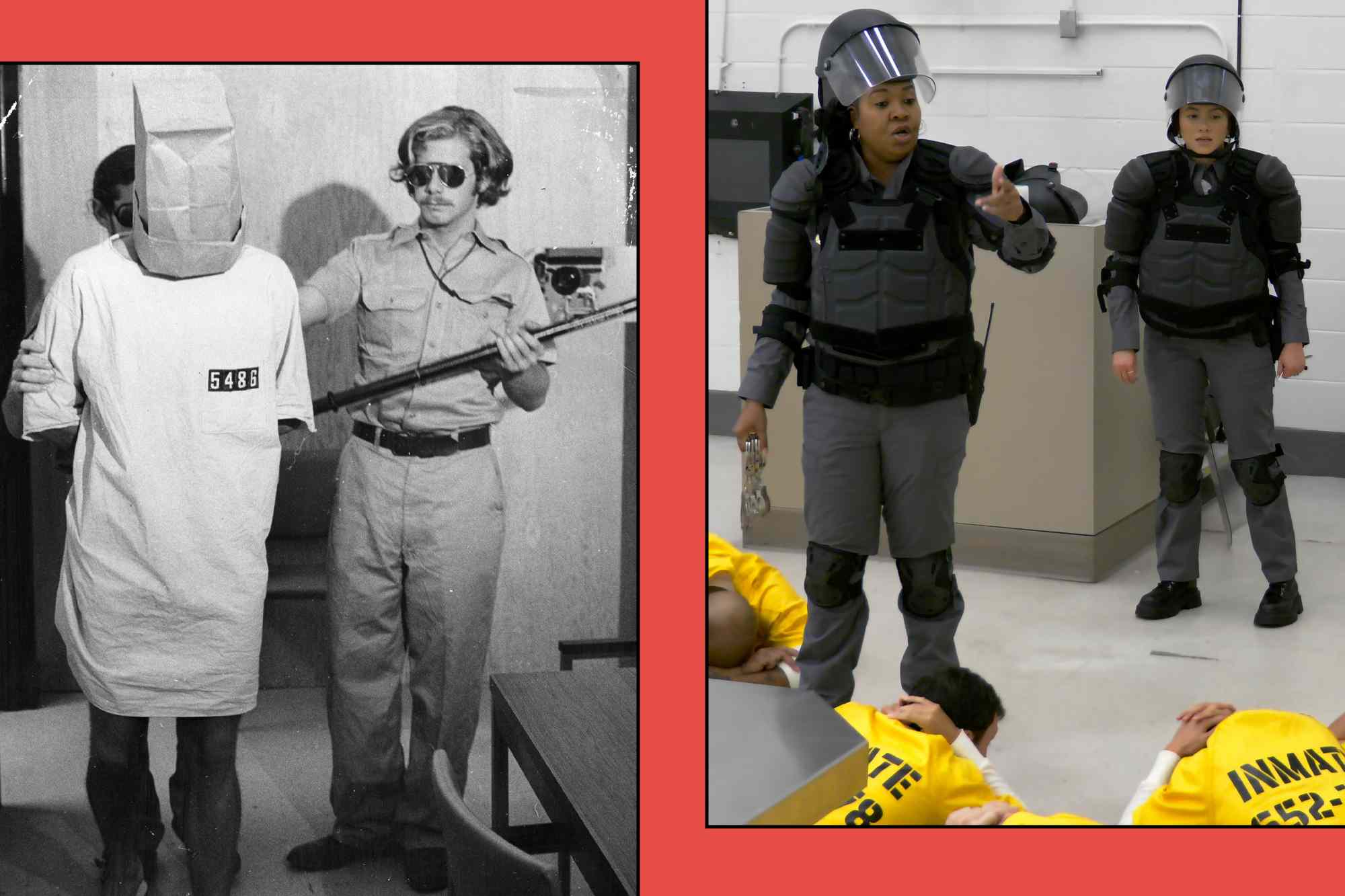
Prisoner with guard John Loftus, during the Stanford Prison Experiment in 1971; Chris Lee, Shavonnah Jefferson and Kiana Goana on ‘The New Stanford Prison Experiment’Credit: Duke Downey/San Francisco Chronicle via Getty; NetflixKey Points -
The New Stanford Prison Experiment is a new Netflix reality show inspired by a real 1971 study.
Conducted by Stanford psychology professor Philip Zimbardo, the study examined how participants behaved in a mock prison.
The study has faced extensive criticism over the decades for its ethical and methodological flaws.
One of the most notorious psychological experiments of all time has been reimagined for the modern age as a reality show on Netflix.
In 1971, Stanford psychology professor Philip Zimbardo recruited 24 male college students for a “psychology study of prison life,” randomly assigning them to play the roles of guards or prisoners. Known as the Stanford Prison Experiment, the study was intended to last two weeks; it ended after just six days. According to Zimbardo, he and his researchers “had created an overwhelmingly powerful situation — a situation in which prisoners were withdrawing and behaving in pathological ways, and in which some of the guards were behaving sadistically.”
Zimbardo’s experiment has since become the subject of numerous books, documentaries, and movies, including the 2015 indie thriller The Stanford Prison Experiment, in which the professor is played by Billy Crudup. More than five decades after the original study, it has inspired a six-part Netflix reality show titled The New Stanford Prison Experiment.
What happened in the original Stanford Prison Experiment? And why is Netflix making a reality show inspired by a study that was notoriously flawed, to say the least? Here’s everything you about Zimbardo, his controversial experiment and the backlash surrounding it, and the new Netflix reality show.
What is the Stanford Prison Experiment?
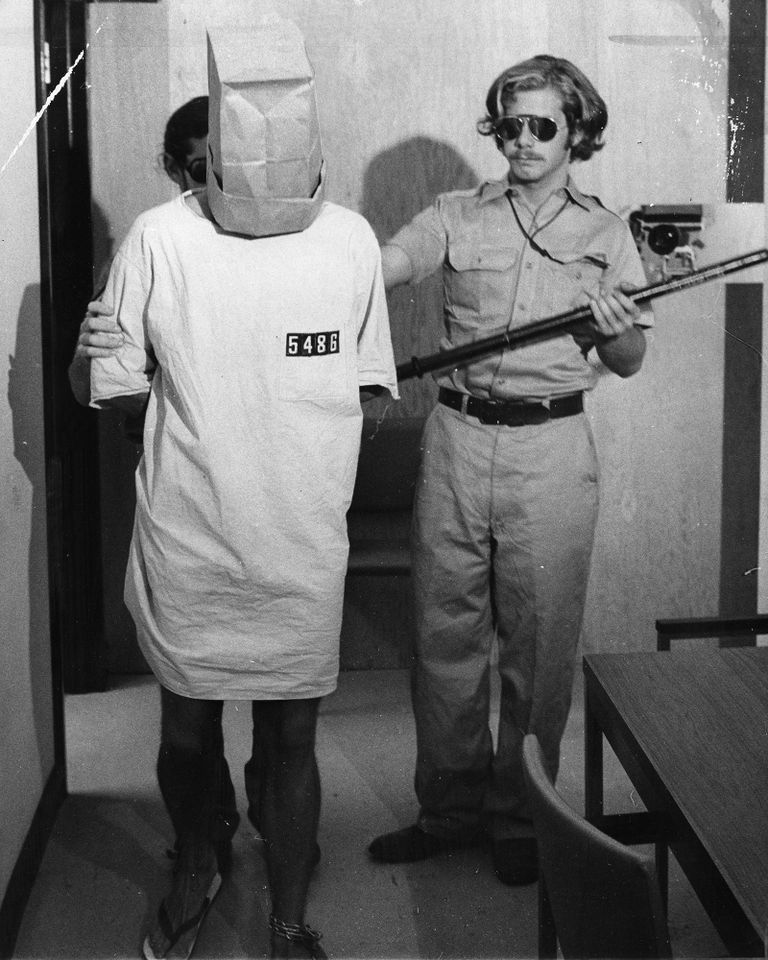
Prisoner 5486 with guard John Loftus during the Stanford Prison ExperimentCredit: Duke Downey/San Francisco Chronicle via Getty
Conducted by Stanford psychology professor Philip Zimbardo, the stated purpose of the prison experiment was “to understand the development of norms and the effects of roles, labels, and social expectations in a simulated prison environment.” In August 1971, Zimbardo put an ad in the local paper looking for “male college students” for a “psychological study of prison life.” Participants would receive $15 a day for the study, which was expected to run for one to two weeks.
After undergoing psychological and health assessments, 24 men were selected from the pool of 75 applicants. They were mostly white, middle-class men of college age “who were judged to be most stable (physically and mentally), most mature, and least involved in anti-social behaviors.” The participants were randomly assigned to role-play as either prison guards or inmates in a mock prison created in the school’s psychology department, consisting of a few prison cells, a hallway used as a prison yard, and a closet that was used as solitary confinement.
On the first morning, police in Palo Alto, Calif., assisted Zimbardo by arresting the mock prisoners and putting them through a booking process.
Zimbardo assigned himself as superintendent of the prison, and his undergraduate research assistant David Jaffe was given the role of warden. They had a separate, more comfortable area to spend time in with the guards. Prisoners remained in the mock prison for the duration of the experiment, while guards were allowed to leave after their shifts. During an orientation session, guards were told to refer to prisoners by their inmate number only and to “maintain the reasonable degree of order within the prison necessary for its effective functioning.” Zimbardo claimed that physical violence was strictly prohibited and that the guards were not given detailed instructions on how to treat the prisoners.
Participants were outfitted in identical uniforms based on their assignment: Guards received khaki pants and shirts, reflective sunglasses to prevent eye contact, a whistle, and a nightstick (a wooden baton), while prisoners were given a “loose fitting muslin smock with an identification number on front and back, no underclothes, a light chain and lock around one ankle, rubber sandals and a cap made from a nylon stocking,” the latter of which was meant to simulate having their heads shaven.
What were the results of the Stanford Prison Experiment?
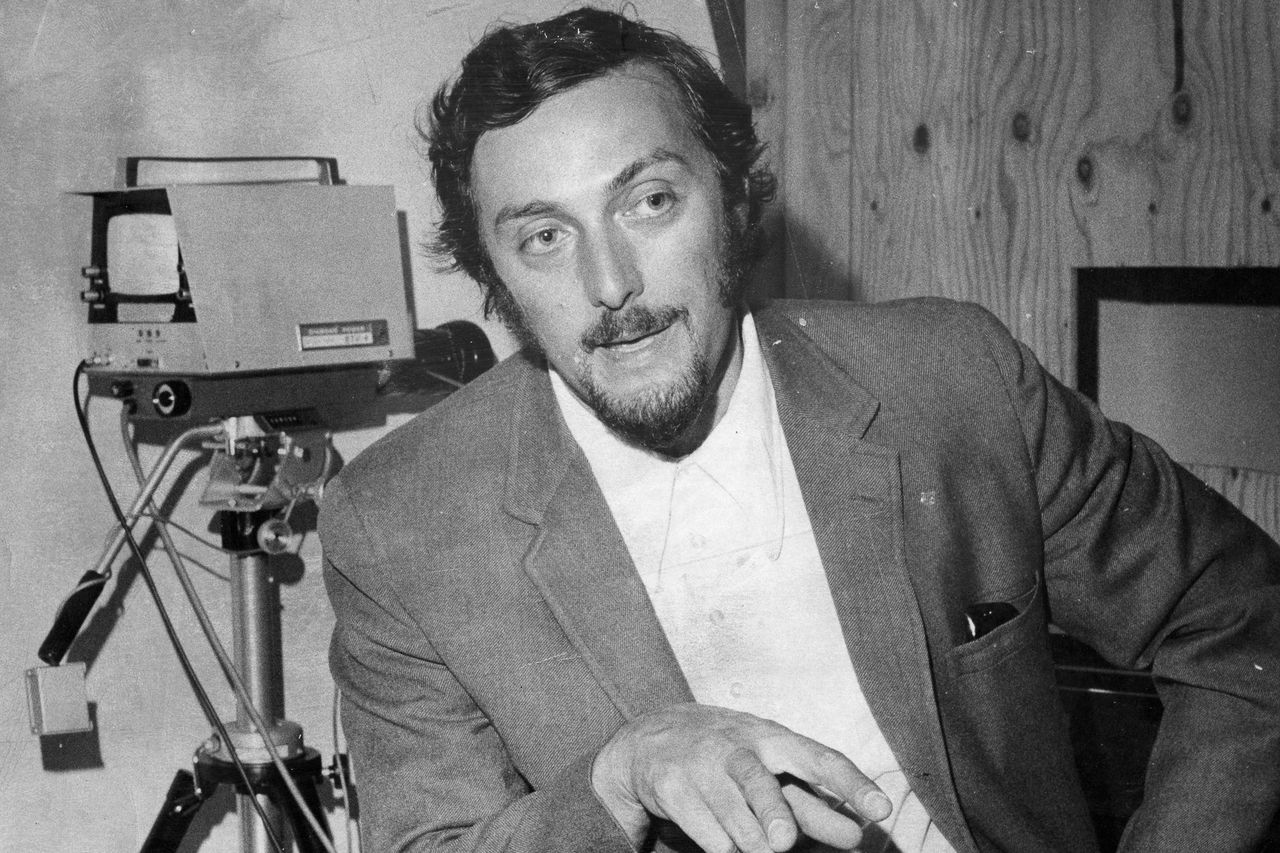
Stanford Professor Philip Zimbardo discusses the Stanford Prison Experiment on Aug. 20, 1971Credit: Duke Downey/San Francisco Chronicle via Getty
During the study, the guards repeatedly used their whistles to alert the prisoners to participate in headcounts, which were often conducted multiple times at night, disrupting their sleep. Push-ups were used as punishment, with one guard deliberately stepping on prisoners’ backs to make the push-ups more difficult.
On the second day, the prisoners staged a protest by removing the numbers from their uniforms and pushing their beds against the cell doors to create a barricade. The guards called in reinforcements and used a fire extinguisher to retaliate, forcing the prisoners away from the cell doors so the guards could enter. As punishment, the prisoners were stripped of their clothing and had their mattresses taken away, while the so-called “ringleaders” were sent to solitary confinement.
The guards then devised a plan to pit the prisoners against one another by rewarding “good” prisoners with special privileges in front of the others, while “bad” prisoners were not allowed to have their clothing, mattresses, soap, or toothbrushes. To really confuse the prisoners, the guards put some of the “bad” prisoners in the “good” cell and vice versa, making it impossible to know who to trust.
Making matters worse, prisoners were not allowed to visit the toilet after 10 p.m., and were instead forced to use a bucket in their cell. According to Zimbardo, “On occasion the guards would not allow prisoners to empty these buckets, and soon the prison began to smell of urine and feces — further adding to the degrading quality of the environment.”
Participant Douglas Korpi, identified as Prisoner 8612, left the study after approximately 36 hours following what Zimbardo described as an episode of “acute emotional disturbance, disorganized thinking, uncontrollable crying, screaming and rage.” Korpi later claimed that he had faked his breakdown to get out of the experiment. After his departure, a rumor began circulating that he was gathering recruits on the outside to mount a prison break. In response, Zimbardo had all the prisoners and guards moved to a different floor while he sat in the mock prison, waiting for Korpi and his comrades.
Instead, Zimbardo encountered “one of my colleagues ... a hard~headed experimental psychologist who, having learned that we were doing an experiment, came to see what was going on.” That colleague, Gordon Bower, asked about the study’s independent variable, prompting an angry reaction from Zimbardo. “Here I had a prison break on my hands,” Zimbardo wrote. “The security of my men and the stability of my prison was at stake and I have to contend with this bleeding-heart, liberal, academic, effete dingdong whose only concern was for a ridiculous thing like an independent variable.”
Advertisement
After the rumored prison break failed to materialize, the guards “escalated very noticeably their level of harassment, increasing the humiliation they made the prisoners suffer.” Zimbardo noted that “about a third of the guards were hostile, arbitrary, and inventive in their forms of prisoner humiliation. These guards appeared to thoroughly enjoy the power they wielded, yet none of our preliminary personality tests were able to predict this behavior.” One particularly hostile guard was referred to by inmates as “John Wayne.”
On the fourth day of the experiment, Prisoner 819 reported feeling ill, refused to eat, and asked to see a doctor. While Zimbardo was speaking with 819, the guards led the remaining prisoners in chanting, “Prisoner #819 is a bad prisoner. Because of what Prisoner #819 did, my cell is a mess, Mr. Correctional Officer.” Zimbardo said that 819 was “sobbing uncontrollably” and when he offered to release him, 819 refused and “said he could not leave because the others had labeled him a bad prisoner.” Eventually, 819 was convinced to leave.
Zimbardo said that he ended the study for two reasons: First, the guards were becoming more abusive at night, when they thought no one was watching. “Their boredom had driven them to ever more pornographic and degrading abuse of the prisoners,” the professor wrote. Second, Zimbardo was visited by fellow psychologist Christina Maslach, who questioned the treatment of the participants. Zimbardo claimed that of the more than 50 outsiders who had observed the experiment, she was the only one “who ever questioned its morality.”
Was the Stanford Prison Experiment real?
In the time since Zimbardo conducted his experiment, his methods have received extensive criticism from psychologists and researchers. Ali Banuazizi and Siamak Movahedi published a 1975 paper in which they argued that the participants were behaving according to demand characteristics, i.e., they had formed their own interpretation of the purpose of the study and what the researchers wanted to see, and acted accordingly.
Their concerns were echoed in a 2019 paper published by French researcher Thibault Le Texier, who criticized Zimbardo’s unethical methods, including the fact that the prisoners were rarely completely immersed in the environment and that the guards were never informed that they were also research subjects. After reviewing archival materials from the study, including audio and video recordings, Le Texier determined that, contrary to Zimbardo’s claims, the guards were not only informed of the purpose of the study but were also given specific instructions, and that the entire experiment was managed by Zimbardo and his assistants.
Get your daily dose of entertainment news, celebrity updates, and what to watch with our EW Dispatch newsletter.
Notably, the Stanford Prison Experiment was also criticized for being susceptible to what’s known as the Hawthorne effect, whereby participants behave differently when they know that they are being watched. That’s particularly relevant with regard to Netflix’s reality show, as well as reality shows and documentaries in general; it’s a central question in You Can See Everything, Nathan Fielder and Lance Oppenheim’s new documentary about former Theranos CEO Elizabeth Holmes.
What is The New Stanford Prison Experiment?
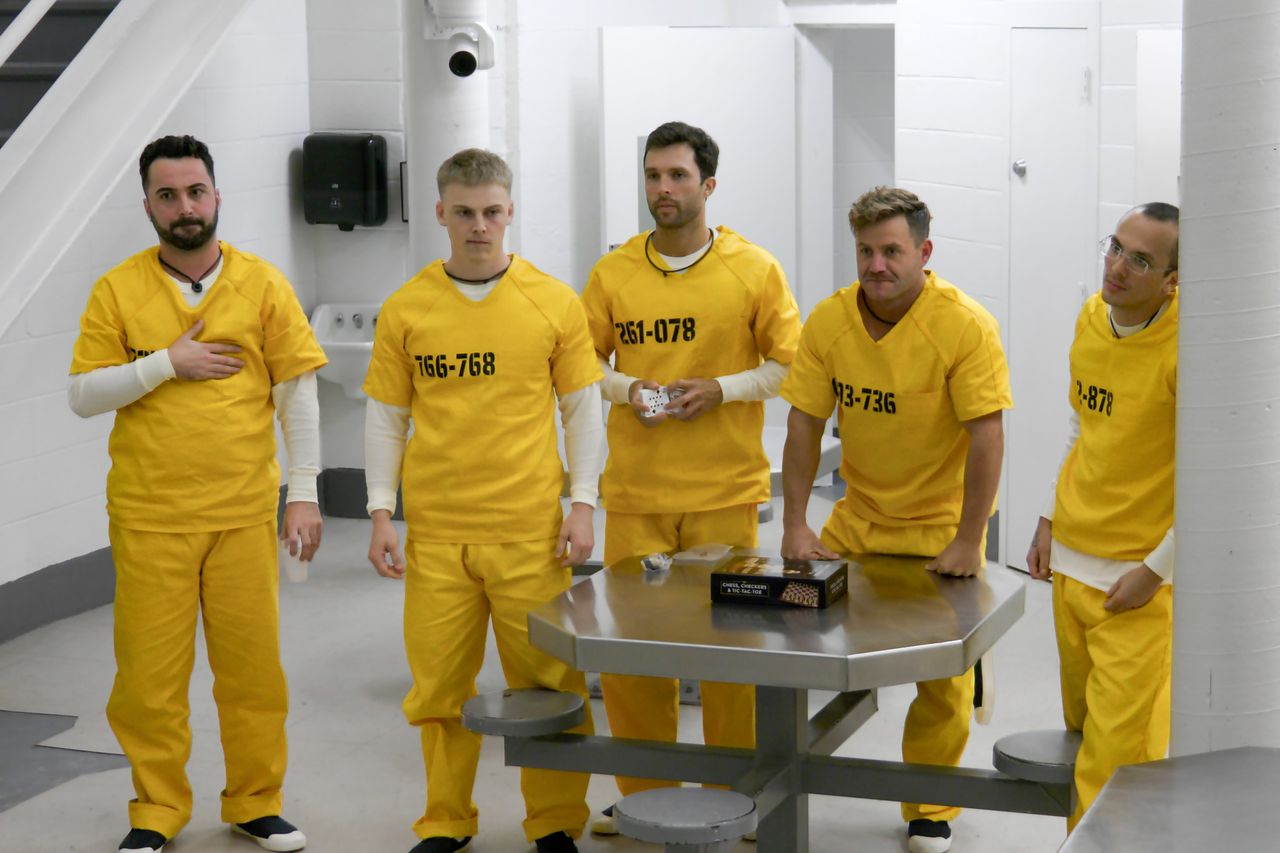
Michael Correra, Jacob Jensen, Josh Hublitz, Sonny Robertson, and Brendan Hardey on ‘The New Stanford Prison Experiment’Credit: Netflix
In The New Stanford Prison Experiment, 30 participants enter a real prison, where they’re randomly assigned to live as either prisoners or guards, with 22 assigned to the former and eight to the latter. The participants are filmed 24 hours a day, seven days a week for the duration of the production. Netflix gestures toward the flaws of Zimbardo’s study in its official description, which says the series “reimagines the infamous study with safeguards and expert oversight that the original lacked.”
When reached for comment about the series, a Netflix representative confirmed that the experiment spanned two weeks. “All inmates spent their time in the prison block and slept in their designated cells,” they said. “Any participant who no longer wanted to participate in the experiment was allowed to leave immediately, at any time, for any reason, by using the safe word.”
The six-episode series is executive produced by Jane Lipsitz and Dan Cutforth, the duo behind reality stalwarts including Top Chef and the original run of Project Runway. “When the show was first announced, there was a lot of outrage that anyone would even attempt the Stanford Prison Experiment again — and given what happened with the original, I completely understand that reaction,” Lipsitz told Netflix’s Tudum. “If we were simply recreating the original experiment, that would be unconscionable. But this is a different time, with different participants, different safeguards and, ultimately, a very different journey.”
Given Netflix’s other recent reality competition offerings, including Wonka’s The Golden Ticket and Squid Game: The Challenge, mounting a filmed reimagining of Zimbardo’s notorious study feels appropriately dystopian. Then again, it couldn’t possibly be more exploitative than the average reality show. At least The New Stanford Prison Experiment’s stated aims are generally more positive.
According to Lipsitz, the purpose of the show is to examine how power changes people’s behavior — a question she said feels increasingly relevant today. “Anyone can see we’re living in a moment where we are constantly confronting questions about authority, conformity, group identity, and the systems that divide us,” Lipsitz said. “It felt like the right time to revisit that question with a new generation and ask whether power inevitably changes us — or whether we’re capable of resisting the roles, the rules and the systems we’re placed into.”
Unlike the original study, The New Stanford Prison Experiment’s participants are much more diverse and include men, women, and people of different races and socioeconomic backgrounds. “For us, casting a much wider net was fundamental to the legitimacy of the experiment,” Lipsitz explained. “The addition of women felt crucial to us as well because of the important dialogue around gender politics and power and we would have been remiss if we didn’t take a look at that as part of this version.”
She also noted that The New Stanford Prison Experiment has multiple safeguards, including the presence of three experts: a behavioral psychologist, an investigative journalist, and a retired federal corrections professional. “The participants all made informed decisions when signing up, and they all underwent psychological screenings prior to entering the experiment. ” Lipsitz added. “Everyone had a safe word they could use to opt out at any time, and psychologists were available 24/7 for support.”
When can I watch The New Stanford Prison Experiment?
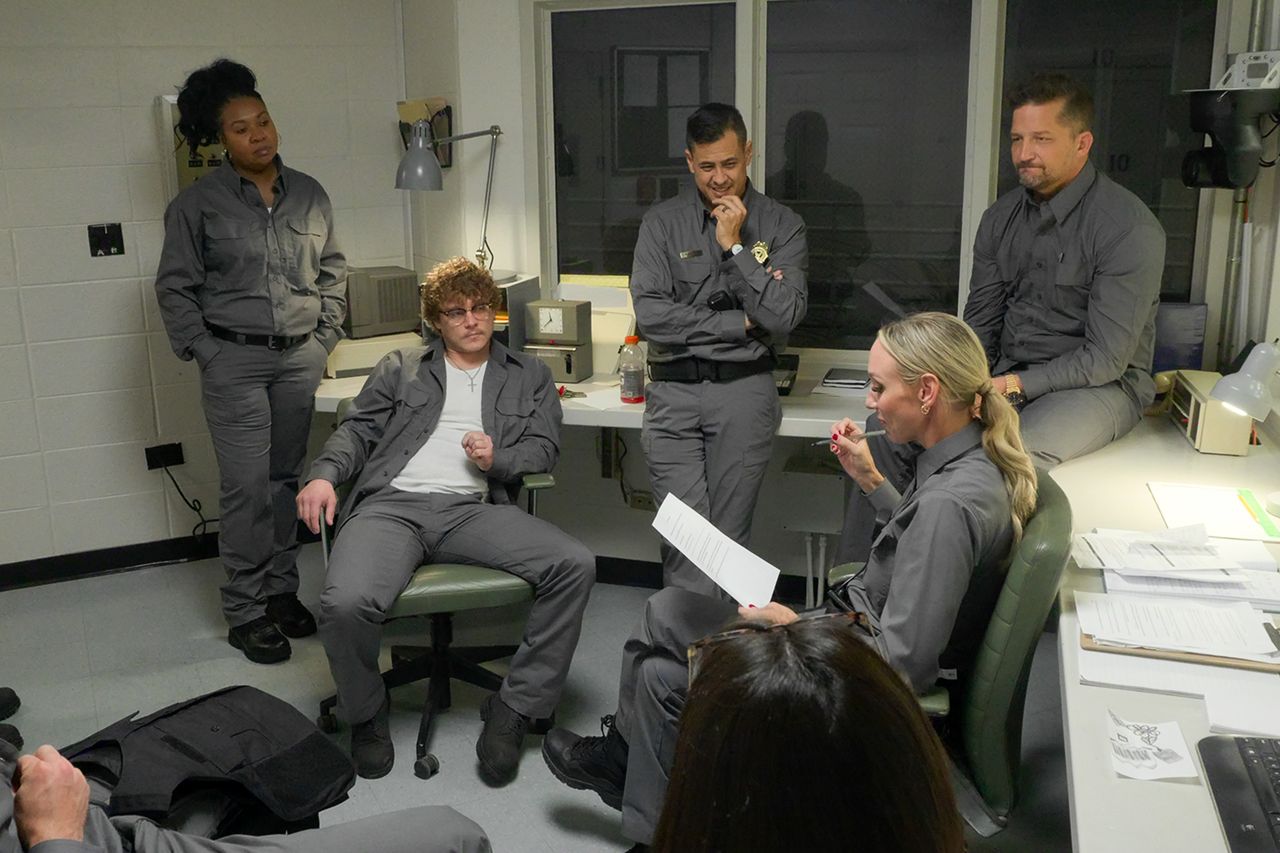
Shavonnah Jefferson, Hadley McDaniel, Joey Malloque, Laura Berens, and Chris Lee on ‘The New Stanford Prison Experiment’Credit: Netflix
The New Stanford Prison Experiment is now streaming on Netflix.
on Entertainment Weekly
Source: “AOL Entertainment”
