


The West’s nervous breakdown should not take away from capitalism’s winning formula
The West’s nervous breakdown should not take away from capitalism’s winning formula

Janet DaleySat, August 22, 2026 at 11:46 AM UTC
0
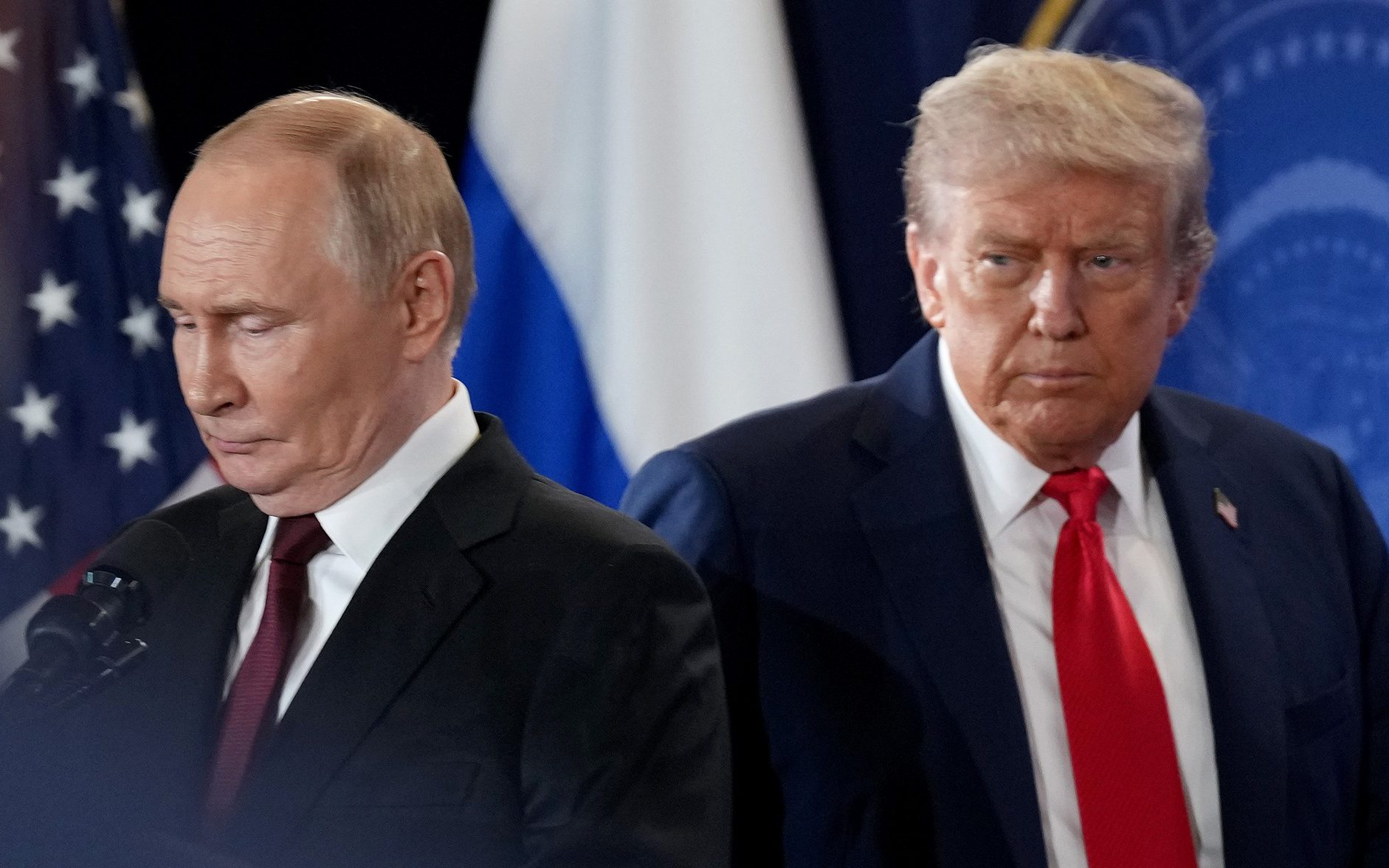
Putin’s Russia is a threat to a ‘free world’ led by Donald Trump - Getty Images
Soviet communism collapsed a generation ago. With a whimper, not a bang, the superpower which had threatened the free world with annihilation was gone.
First came the relief. The astonishing disintegration of what had been an apocalyptic nuclear threat suggested that Western military plans could be scaled down. It was blithely assumed that the enormous amounts of money that had been devoted to defence spending might be redirected for home use.
We are now aware of how misjudged that conclusion was. Roughly 30 years on, this triumphant Western way of life – with its democratic liberties and free market wealth – is having a nervous breakdown. Instead of flourishing as the undisputed winners of the argument about how society should be run, European countries are struggling with a rise of political extremism, a breakdown of trust in government itself, and the emergence of vicious, potentially violent, factionalism. To add to this, the President of the United States, the leader of the free world, is an infantile narcissist.
So what went wrong? In Europe and the UK (but not the US) the mainstream political parties had appeared to reach a consensus on ideal modern governance: the values of socialism would be combined with an essentially capitalist economy, thus producing the best of all worlds. Social democracy (or, more contentiously, “democratic socialism”) would permit free markets to create wealth which could then be distributed with what political leaders declared to be justice and compassion.
The moral aspirations of the Left – for equality and social “fairness” – would be funded by the profits of a capitalist market economy. This was the tacit agreement of almost all mainstream political parties in Britain (thus giving rise to the “uniparty” accusation) and in Western Europe generally.
Finding the perfect balance was the only question open for debate. Politicians on the Left favoured the redistributive side of the equation, regarding capitalist wealth creation as a necessary evil. Their governing project was to confiscate as much of the profit as the market would tolerate without destroying the basic mechanism of enterprise. The parties of the Right fought a largely defensive battle on behalf of wealth creation, as often as not using the self-defeating language that had been established by the Left.
Instead of presenting the inherent virtues of private enterprise – that it enables self-determination, individual achievement and personal responsibility – they argued simply for its necessity as a means of growing the wealth that was required to finance those programmes which would reduce social inequality.
And so they effectively handed over moral righteousness to the Left. We had arrived at the widely accepted caricatures of modern politics: the Left is kind and well-meaning but economically incompetent; the Right is ruthless and amoral but efficient at creating the conditions for wealth creation. This analysis so effectively captured the public discourse that it made the case for the positive value of enterprise – and entrepreneurialism – appear outrageous.
For all its simplistic failings, this rhetorical formula survived the first couple of decades of the post-Soviet era and seemed to be delivering a more-or-less acceptable political dynamic. But the big historical mistake has become clear: the stability of the world order was not simply about communism vs capitalism.
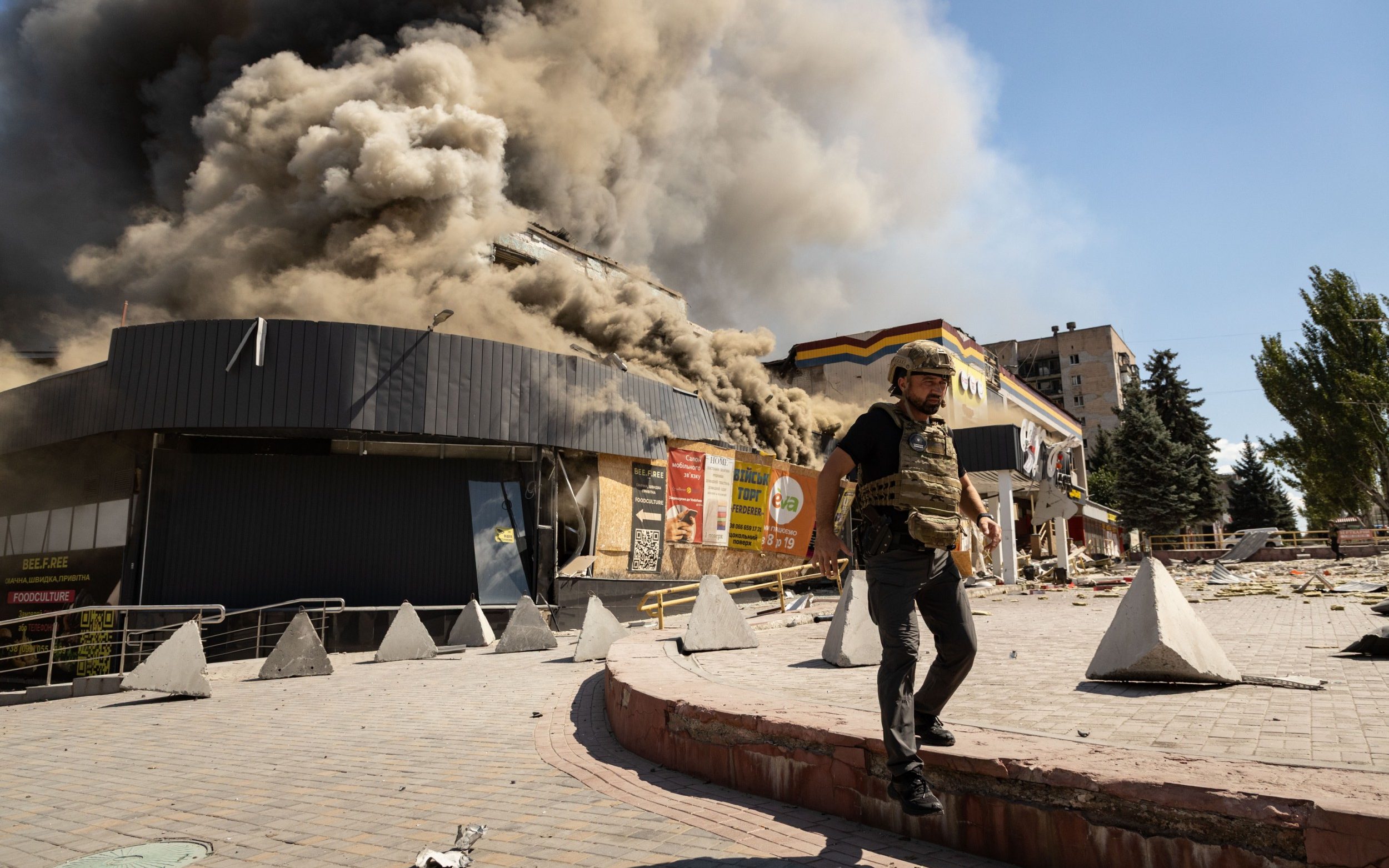
A Russian strike on a supermarket in Ukraine as the Kremlin continues to threaten Europe’s eastern border - Anadolu
Post-communist Russia, deranged by its own loss of status, has become a new threat on Europe’s border. China – which calls itself “communist” but actually wants to be a dominant player in the global capitalist game – presents a demonically rapacious challenge.
Advertisement
The rise of a destructive form of Islamism has unleashed a fresh horror for which the modern, secular West is peculiarly ill-prepared. These are all problems which will have to be faced by a West which is now floundering in its own profound political self-doubt.
So it is desperately important that we try to understand this existential crisis before it undermines the credibility of our governing arrangements. First, it must be acknowledged that the original social-democratic inclination – the desire to alleviate poverty and reduce social disadvantage – was justifiable.
After a century that had seen two world wars and an economic depression, there was a legitimate belief that ordinary people had endured exceptional suffering and sacrifices for which they deserved recompense. This was very much the case in Britain when the post-war welfare state was founded.
There was also a more covert belief that the softer form of socialism – the democratic kind which co-existed with free market economics – would make the more dangerous, totalitarian form less appealing.
The degree of government control was always going to be the problematic issue. Did democratic socialism involve state ownership of the means of production? That was a Marxist principle which was obviously central to a communist economy but until very recently, it was embodied in a clause of Labour’s foundational document.
In the UK, with the advent of New Labour, the old resistance to capitalism seemed to disappear. There were similar adaptations of Left-wing doctrine in Europe too which saw centrist parties, often operating in coalitions, reach accommodation between social welfare provision and the private sector profit that funded it.
In truth, these conciliatory bargains never seemed to achieve the perfect resolution that they promised. Their general acceptance may well have been largely a product of the relief that followed the terrible world wars.
But what is it that has gone so wrong that we are now in genuine fear of the next political development? First, paradoxically, the collapse of Soviet communism has unleashed Left-wing extremism in the West of a kind that was once too dangerous to permit: if you were a far-Left agitator during the Cold War, you were working for the enemy.
So the failure of the greatest Marxist project in history has actually liberated Left-wing activism. Tragically, its campaigning is made to seem more acceptable by the failure of the centre-Right to defend capitalism wholeheartedly – which in turn has caused the emergence of further Right extremism.
In the midst of this discontent, there is a truth that remains inviolable. The combination of liberal democracy and free-market economics creates the best possible conditions for human beings to flourish. That is why millions of people are clamouring to enter the countries that embrace it. Hold on to that.
Source: “AOL Breaking”
