


Ileana Cotrubas, soprano and Covent Garden favourite unafraid of taking on conductors and producers
Ileana Cotrubas, soprano and Covent Garden favourite unafraid of taking on conductors and producers

Telegraph ObituariesSun, August 23, 2026 at 2:45 PM UTC
0
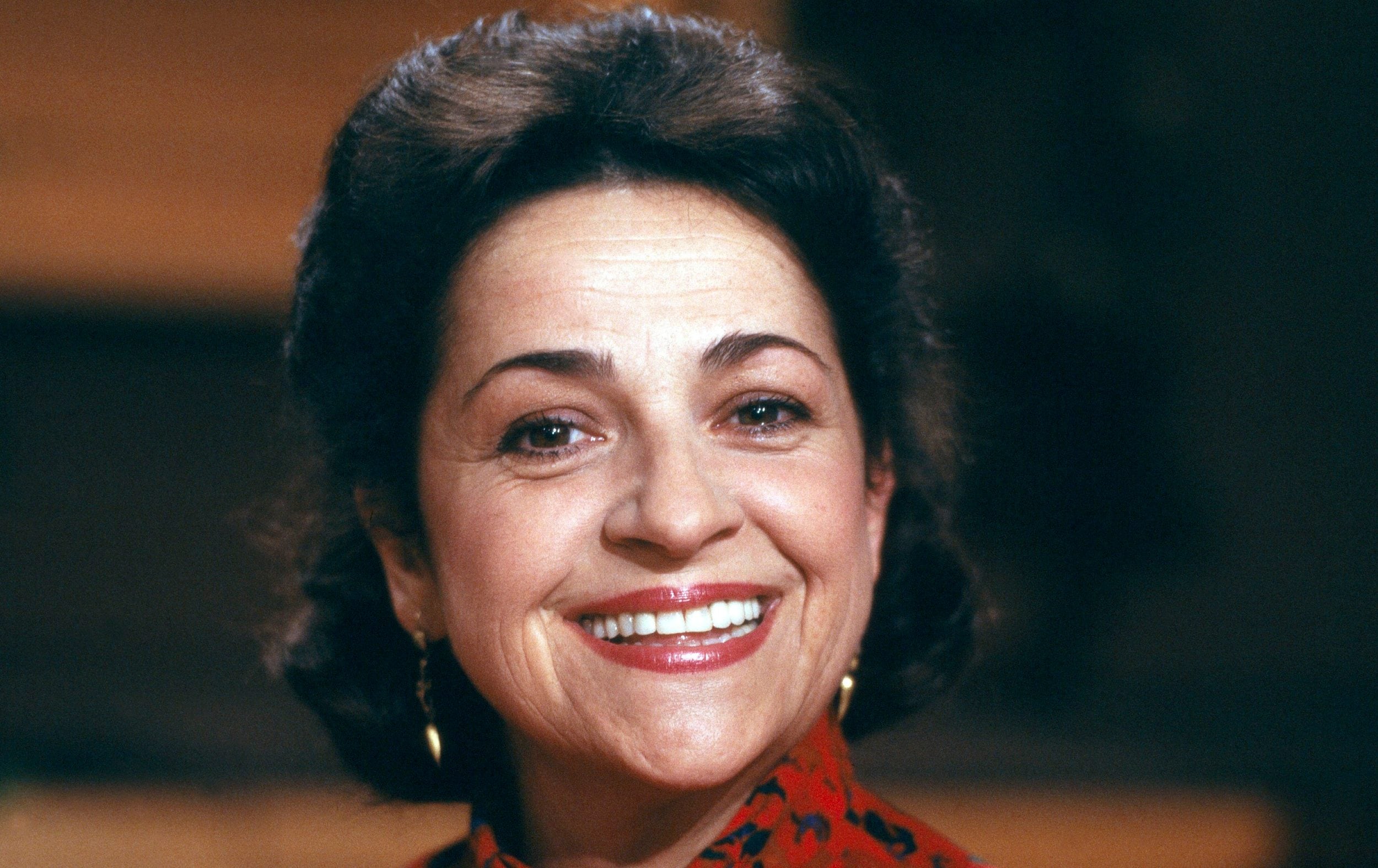
Ileana Cotrubaș: ‘She always has something important to say,’ said Sir John Tooley - United Archives
Ileana Cotrubaș, who has died aged 87, was a Romanian soprano and a stalwart of the Royal Opera House, Covent Garden, appearing there on almost 140 occasions between 1971 and 1989; slight in build, intensely musical and highly intelligent, she portrayed her characters to perfection through her sense of the dramatic, her vulnerability and her highly individual voice.
Sir John Tooley, sometime director of the Royal Opera, thought she fretted too much about what was going on around her. “But she cares,” he wrote, “and has to express her feelings and opinions. In turn, you listen. She always has something important to say.”
He described the shock on her face in March 1974 when, during the first scene of Verdi’s La traviata, he walked on stage rather than José Carreras to announce that there had been a bomb scare and that the opera house had to be evacuated. She later recalled: “In full costume and make-up, looking very silly, we all went out into the streets with the audience around us.”
Ileana Cotrubaș had made her British debut at Glyndebourne in 1969, succeeding Denise Duval as Mélisande in a revival of Debussy’s Pelléas and Mélisande conducted by John Pritchard, her favourite conductor. After her audition for him in Munich the previous year, he had declared: “You are my Mélisande.” She shared the performances with the British-Caribbean soprano Jill Gomez, who died nine days before her.
The reviews were overwhelmingly positive and Ileana Cotrubaș was immediately engaged for future seasons. She gave a beautiful account of the title role in Raymond Leppard’s realisation of Cavalli’s La Calisto with Janet Baker and James Bowman, was a sympathetic Pamina in Mozart’s The Magic Flute with Richard van Allan and Norma Burrowes, and played a coquettish Susanna in The Marriage of Figaro, with Elizabeth Harwood and Kiri te Kanawa sharing the part of Countess Almaviva.
Ileana Cotrubaș rarely shied away from telling producers and conductors when she thought they were wrong. Pritchard said of her: “She is one of the only artists who doesn’t accept that the producer tells her to enter and exit through a certain door, but wants to know why she should use that particular door.”
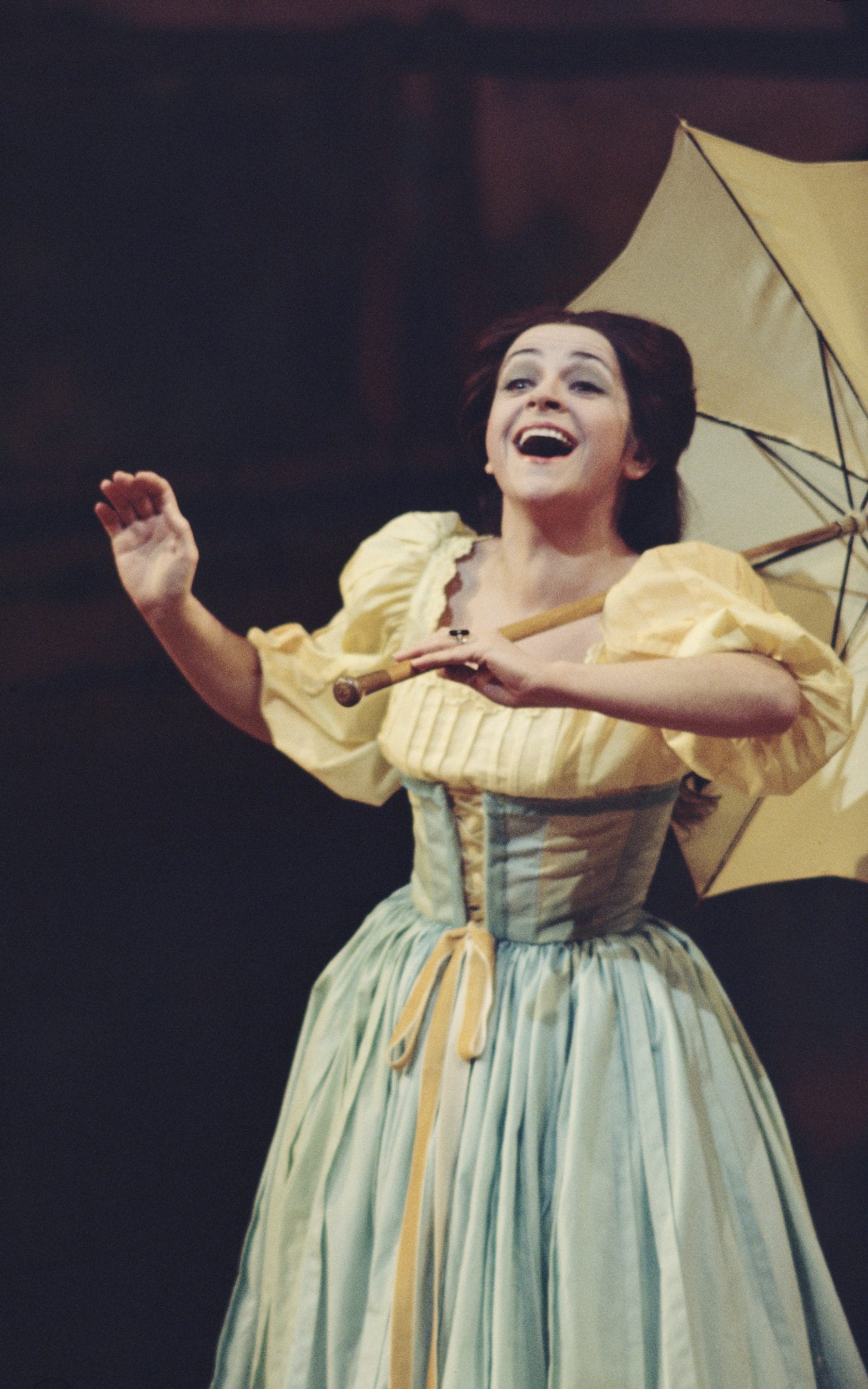
Ileana Cotrubaș in the mid-1960s - Erich Auerbach
She preferred traditional opera stagings, walking out of Tchaikovsky’s Eugene Onegin in Vienna in 1973 saying that the director did not listen to the singers. “We are not puppets or marionettes. I have my own ideas, and I like to talk to the stage director and work out what is best for him and what is best for me,” she told The New York Times in 1977. The Metropolitan Opera in New Yor felt her wrath in 1980 when she quit Donizetti’s Don Pasquale directed by the similarly strong-willed John Dexter. The following year she threatened to withdraw from La traviata with Plácido Domingo if Dexter directed. He did not.
On another occasion she refused to sing the final performance of Puccini’s La bohème at the Met, claiming that the conductor Eugene Kohn lacked sensitivity. “He has no personality, none of the rapport that a conductor should have with his singers. I don’t want him to be just an accompanist,” she said. Friends urged her to think of the fee she would lose. “But my conscience will not permit me to go on. I will not prostitute myself for the money.”
La bohème had provided the backdrop to one of the most exciting days in her career. On January 7 1975, Mirella Freni was due to sing the role of Mimi with Luciano Pavarotti at La Scala, Milan, but fell ill. “Pavarotti told them: ‘Get Cotrubaș’,” she recalled. La Scala tracked her down to her home in Kent, though at first she demurred, saying she had not sung the role for a year.
Advertisement
Her husband insisted. “Well, what can I tell you?” she later said. “The rush started. The plane was late. Malpensa Airport was closed because of fog. I didn’t have a visa, and with a Romanian passport you needed a visa. I started to do my make-up in the plane. They came to the plane in a car with the police and took me to the theatre. We arrived quarter to nine at La Scala, 15 minutes before curtain time.”
Pavarotti greeted her, passing on a few notes, and the performance began. After her aria, Si, mi chiamano Mimi, there was, she said, an earthquake among the audience. “I was shaking and trembling and starting to cry. And Luciano said: ‘Not now, not now’. In the end they shouted and shouted, and Pavarotti and [the director Franco] Zeffirelli left me alone for the applause. And I thanked God.”
When the final curtain came down on her career, even Ileana Cotrubaș’s most devout fans were caught off guard. In October 1989, having recently turned 50, she gave a recital at the Royal Opera House, announcing just beforehand that it would be her valedictory performance. By the end, tears were streaming down her cheeks. She gave three encores, took a dozen curtain calls and brought the packed house, including the Duke of Gloucester, to its feet.
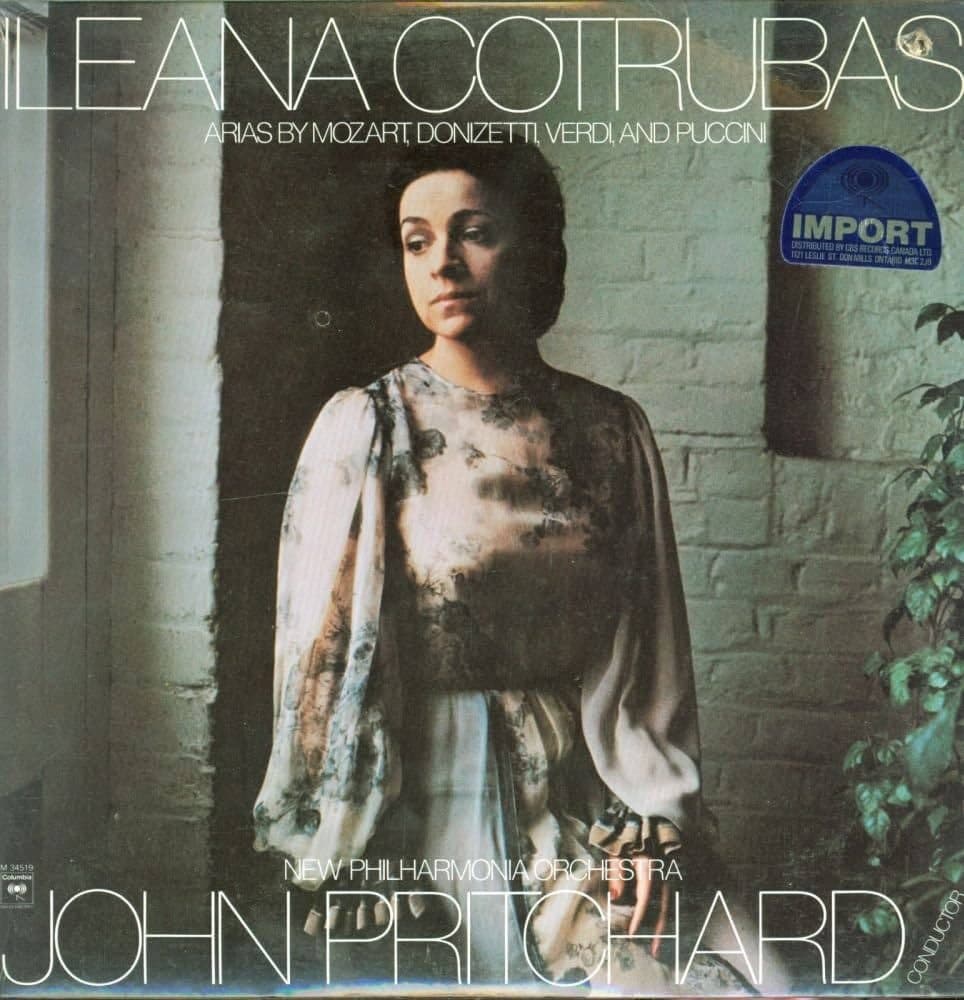
‘She doesn’t accept that the producer tells her to enter and exit through a certain door, but wants to know why she should use that particular door,’ said John Pritchard, her favourite conductor
Ileana Cotrubaș was born in Galati, eastern Romania, on June 9 1939, one of two daughters of Vasile Cotrubaș, a civil servant in the agriculture ministry who sang tenor in the office choir, and his wife Maria, also an amateur singer. By the age of she was performing with the Romanian Radio Children’s Choir. Her first visit to an opera house was to sing in the children’s chorus of Bizet’s Carmen. She also learnt La bohème and Mussorgsky’s Boris Godunov “from the working side of the footlights”.
The family moved to Bucharest so that she could study at a school for musically gifted children, and later at the city’s conservatory. In 1964 she made her debut at the Bucharest State Opera as Yniold, Golaud’s son, who spies on the protagonists in Pelléas and Mélisande. Nadia Boulanger, the French conductor and composer, was in the audience and congratulated her afterwards on her excellent French.
She won the s’-Hertogenbosch competition in the Netherlands and continued her studies in Vienna before joining Frankfurt Opera and later Vienna State Opera. In 1971 she stole the show in her Covent Garden debut as a delectable Tatyana in Peter Hall’s staging of Tchaikovsky’s Eugene Onegin conducted by Georg Solti. She often worked with Hall, notably at Glyndebourne, where in 1981 she gave a vivacious and fresh-toned account of Tytania in Britten’s A Midsummer Night’s Dream with Felicity Lott and James Bowman.
Gradually Ileana Cotrubaș retired many of her Mozart roles, turning her attention instead to Verdi. She sang a tender and touching Elisabetta in Don Carlos (London, 1985) and a moving and committed Amelia in Simon Boccanegra (Naples, March 1986). She objected to supertitles in opera houses, saying that they are a distraction and that audiences should read about the opera in advance.
In retirement she was generous in her teaching and forthright in her masterclasses. Her most famous students included the Georgian soprano Tamar Iveri and her fellow Romanian soprano Angela Gheorghiu, who, like her mentor, has engaged in battles of will with directors and conductors.
Ileana Cotrubaș married the German conductor Manfred Ramin in 1972. For some years they lived in Sevenoaks, Kent. He survives her. “No, we have no children. It is a mad world, a dangerous one for children,” she told The New York Times. “A child needs a real family and a good education; and these we cannot provide.”
Ileana Cotrubaș, born June 9 1939, died August 20 2026
Source: “AOL Entertainment”
