


Celeb impresario Charles Finch: ‘I’ll kick out whoever behaves badly, I don’t care who they are’
Celeb impresario Charles Finch: ‘I’ll kick out whoever behaves badly, I don’t care who they are’

Ed CummingTue, October 20, 2026 at 11:00 AM UTC
0
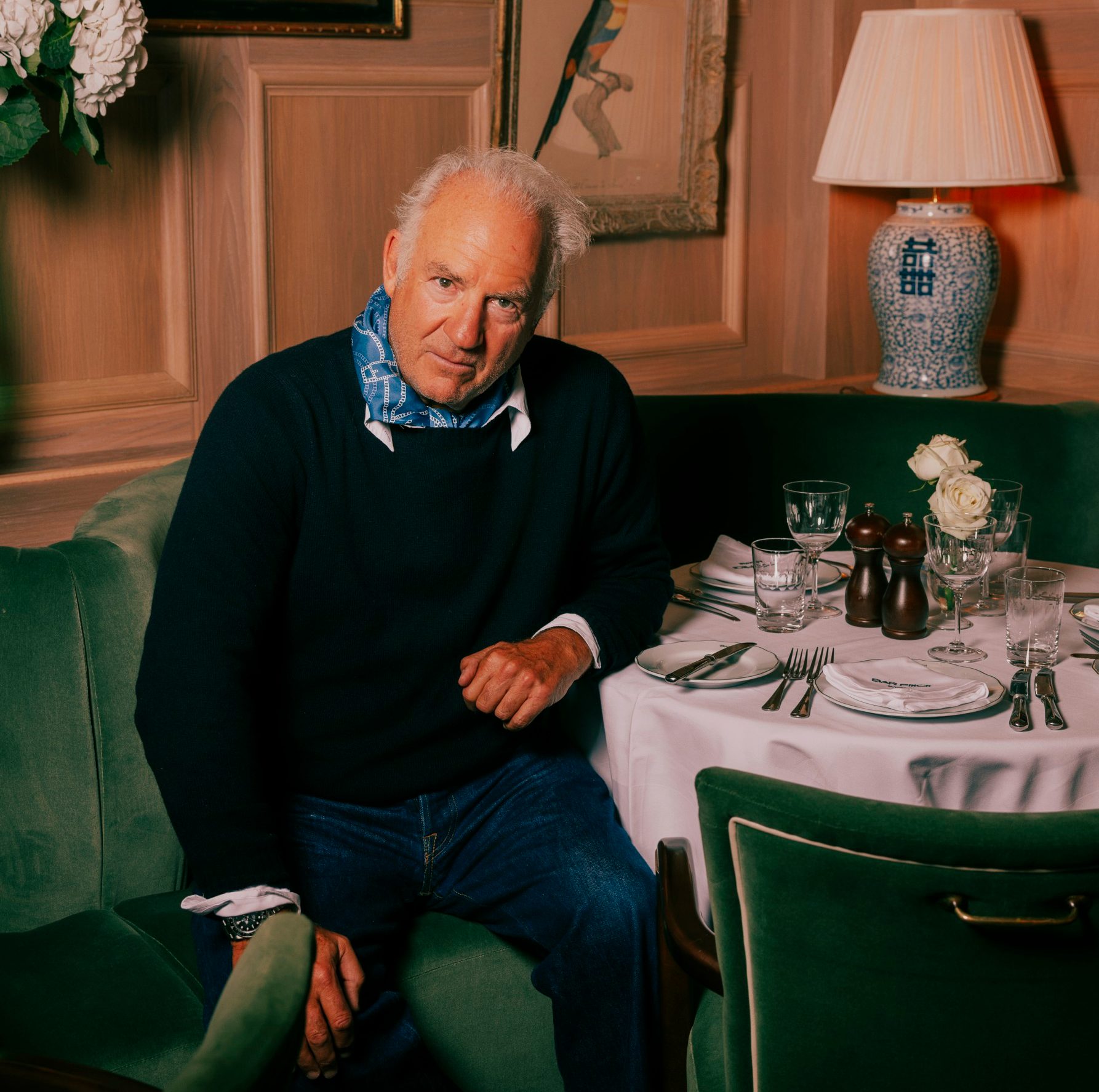
Charles Finch photographed at Bar Finch in Mayfair for Telegraph Luxury - Manuel Vazquez
After a lifetime exercising his judgment in the service of films, actors, brands and parties, Charles Finch at last has a physical premises that can be a perfect expression of his taste. Nestled among the galleries and ateliers on Cork Street behind Savile Row, Mayfair, Bar Finch is a haven inspired by the man’s life and interests.
There are model sailing boats on the wall, light wood panels, green banquettes and tartan carpets. Part Venetian cocktail bar, part New York bistro and all-day café, it is a chic, discreet bolthole where Finch and his friends, not all of whom are famous, can settle down for a martini and a perfect hamburger without ending up plastered over social media.
“I like restaurants because they’re complicated,” Finch says, looking around, evidently still amazed he got the place open. “They’re a bit like opera. You’ve got all these components – food, people, management, design – in this crescendo of bringing everything together. I think we’ve done a good job. I just wanted to have a lovely neighbourhood restaurant, small but cosy, local for art dealers. Very low key and clublike, without being a club.”
The Government and council, he notes with a little venom, have not made life easy. “It’s difficult in England and in London to build a restaurant. The regulation from successive governments is a real problem.” Mayfair, he points out, was always a haven of artisans, but has been hollowed out. “We made small business really difficult,” he says. “We became a service country. I don’t know what that means. In Mayfair we made shoes, suits, trained apprentices, had restaurants that were leading the country. But those things are completely neglected. We have abandoned them.”
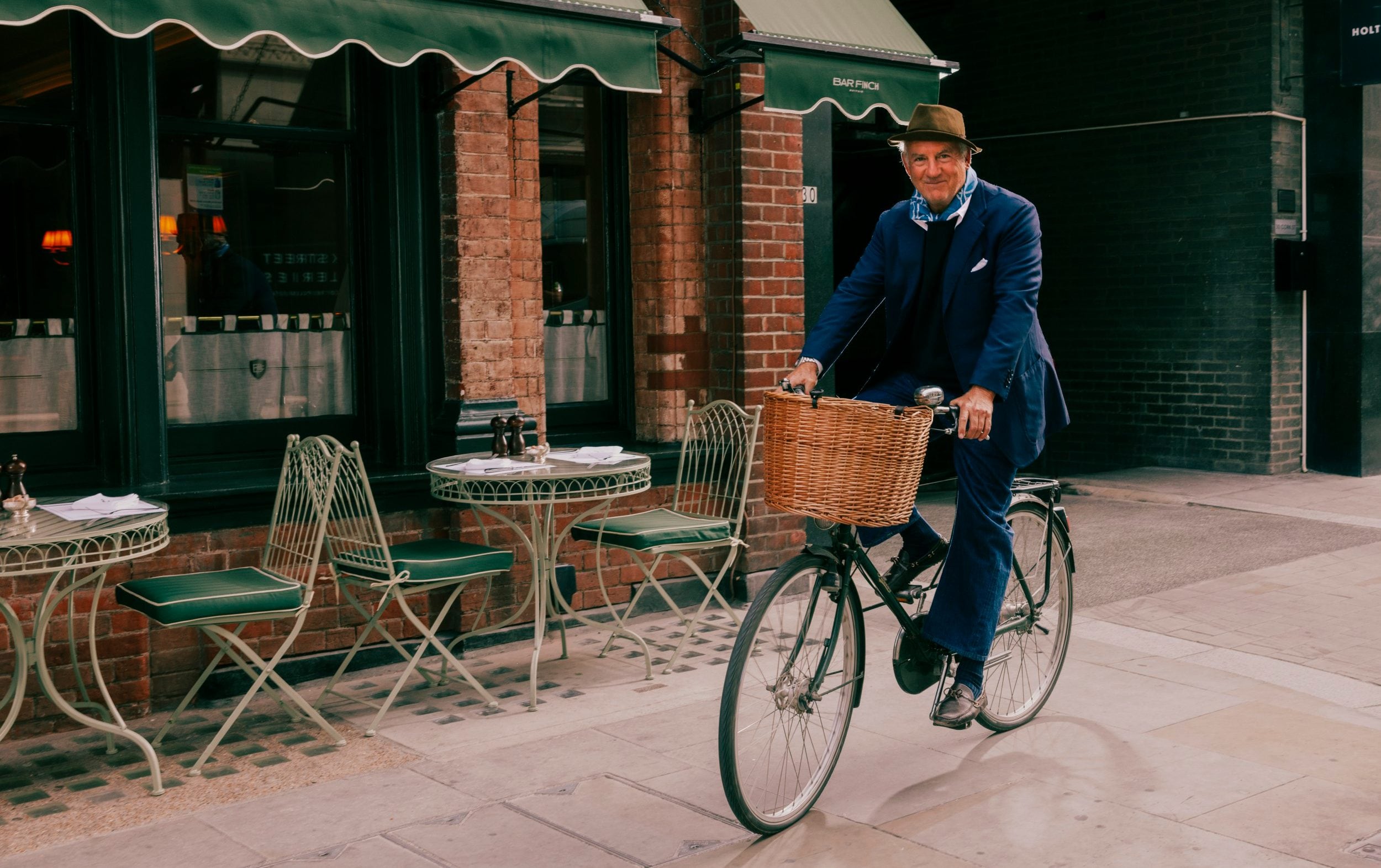
Finch says ‘regulation from successive governments’ is putting real strain on restaurants - Manuel Vazquez
“This moment is a wake-up call for London,” he says. “We’ve sent all the rich away. We’ve been hit by Brexit, so it’s harder to hire staff. And yet we let in [an] enormous amount of unskilled labour that we don’t use. It’s a very difficult time. I’m hoping Andy Burnham from the North has a bit of happiness and joy and courage.”
Finch, who recently turned 64, has led the kind of charmed and glamorous life that sometimes seems like it has vanished. We meet on a bright weekday morning, where there is already a steady stream of customers through the door. In smart jeans, brown moccasin loafers and a navy blue jumper, he is a picture of affable quiet luxury. He dismisses his employees with instructions and an affectionate “f—k off” so we can get down to the interview.
Over the course of his career Finch has been a writer, actor, producer, publicist, publisher and thrower of some of the most famous parties in Hollywood. He knows absolutely everyone: Bar Finch has already had a stream of stars – Sir Mick Jagger, Harvey Keitel, Ralph Fiennes – through its doors. “For years I lived with the criticism that I was a jack of all trades, master of none,” he says. “But I couldn’t be in one lane because I was so enthusiastic about all these things.”
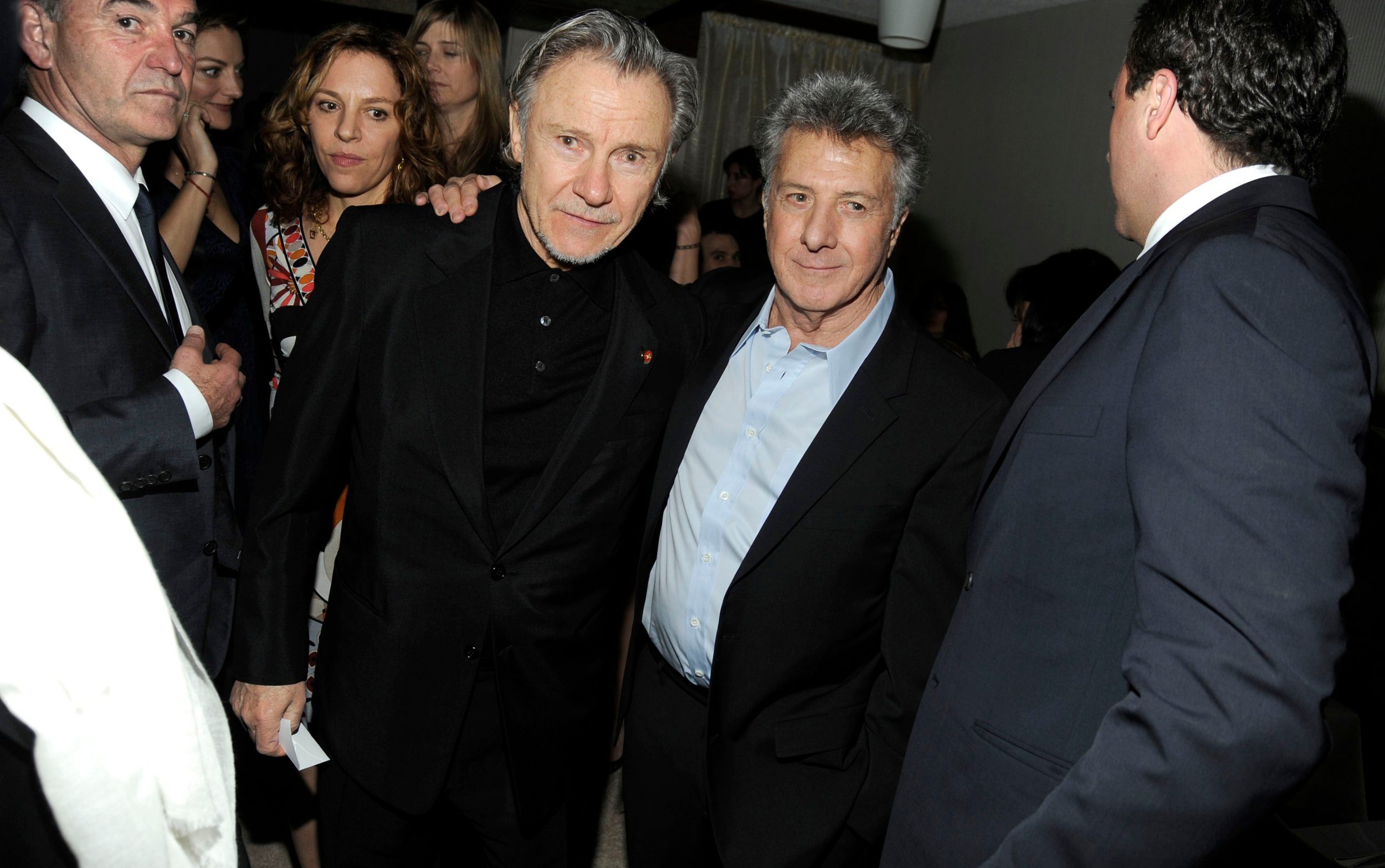
Harvey Keitel and Dustin Hoffman attend the Chanel and Charles Finch Pre-Oscar Dinner in March 2010 - Getty Images/BILLY FARRELL/Patrick McMullan
As well as Bar Finch he has a film coming out, The Custom of the Country, and a new issue of the magazine, A Rabbit’s Foot, which he publishes. He is producing a film adaptation of Rory Stewart’s book, The Places in Between, about Stewart’s walk across Afghanistan. But the man himself remains somewhat enigmatic, at least relative to his outsize presence in media and publishing circles. “I like to be quite low profile,” he says.
“If press is tied to a project you love and lets other people know about it, then I’m happy to do it. If it’s for self-glamorisation of your ego, then you shouldn’t f—king do it.” He has had no shortage of exposure to ego. He was born in 1962 into a storied family. His grandfather, George Ingle Finch, was a famous mountaineer who climbed Everest. His father was Peter Finch, the actor who won an Oscar for his role as a disaffected newsreader in Network who had a breakdown and ended up shouting: “I’m mad as hell and I’m not going to take this any more.”
Finch senior died before the film came out, but it has earned a permanent place in the Hollywood firmament. Despite his celebrity, he was an absent father, and Charles and his older sister were raised mostly by his mother, the actress and writer Yolande Turner, between Jamaica, the south of France and London. Despite the family’s fame, money was tight.
“I think it is probably better if the father is present,” Finch says. “But it depends on the father. As Churchill said, if the tall tree falls, there’s more light for the saplings. [Churchill’s words were, ‘Solitary trees, if they grow at all, grow strong.’] I grew up in the shadow of quite a few extraordinary figures. But by the time I was 14 or 15, there was no money left.”
Advertisement
He got a scholarship to board at Gordonstoun, the alma mater of the King, where he was head boy and a fixture on the sports field. He loved mountains and cooking from a young age, and made ends meet by catering parties. “I was very interested in climbing mountains,” he says. “Why would you eat badly on the hill? So I would make amazing spreads for packed lunches. In France, too, it would have to be the good pâté and good baguette. It doesn’t have to be expensive, it has to be good.”
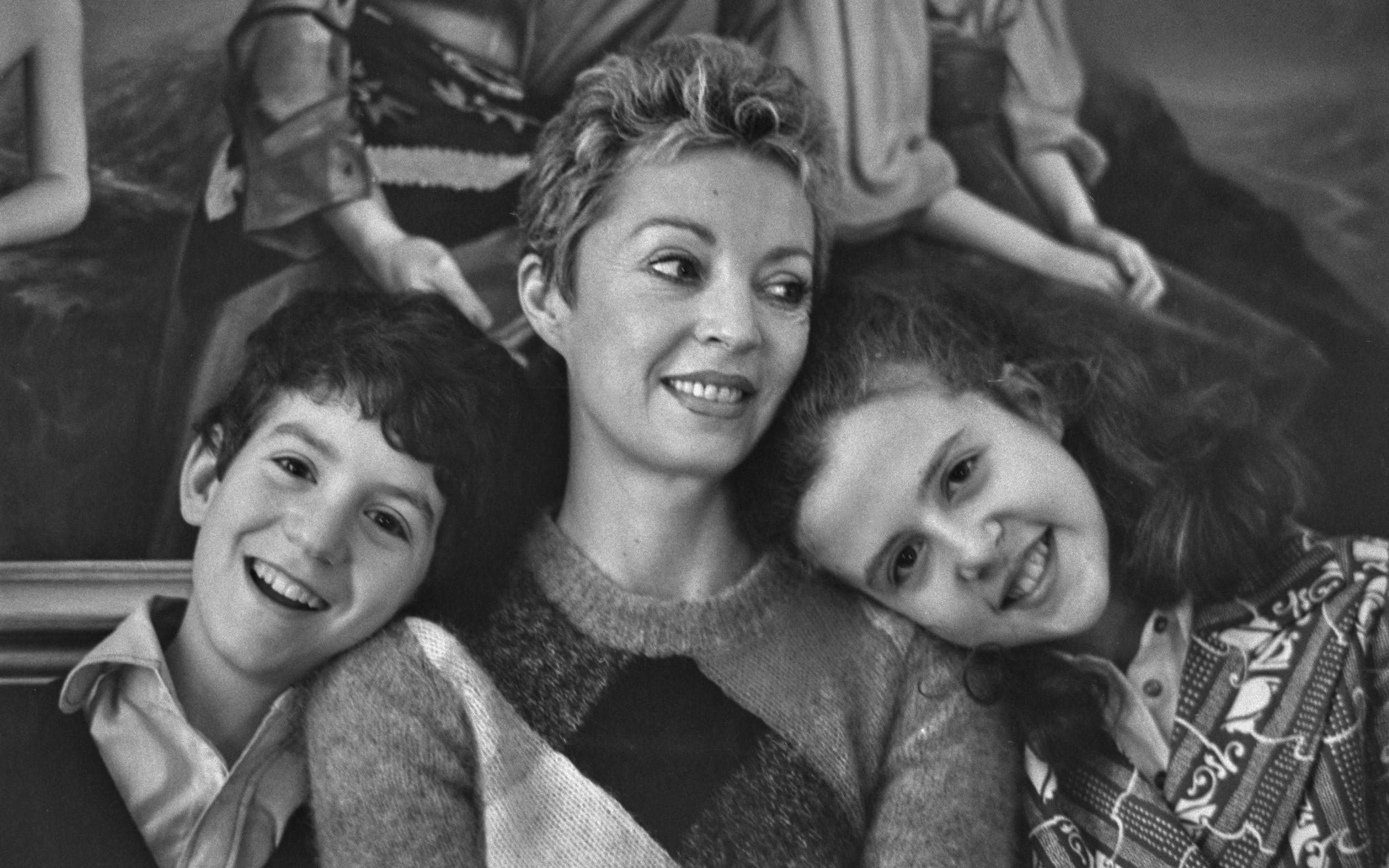
Yolande Turner pictured with her children Charles (left) and Samantha in 1974 - Hulton Archive/Getty Images/ M. Stroud/Express
He attributes his entrepreneurial spirit to this strange confluence of factors in his childhood. “My sister and I were abandoned by our father when I was four and she was five,” he says. “I think if you’re abandoned, and if you have known great wealth and then it vanishes overnight, you are more inclined to be a seeker.” Determined to become an actor, Finch moved to New York and started writing and selling film scripts.
“I had this idea that getting out of England, where I had all this family and history, would be helpful. I went to America with $300. Now it wouldn’t be possible. ICE would have come and picked me up. I was completely illegal. America gives you a chance to reinvent yourself. They believe in themselves. When you’re young you don’t know what you’re doing and have this courage to do things your way. As you get older you get slightly shyer about your abilities.”
He had a film, Priceless Beauty, made when he was just 22. “I made my first million then, too,” he recalls. “My mother warned me that it was all happening too young. She said you may have put together a good deal but you don’t know what the hell you are doing. She was right. I was too young, the movie wasn’t good.” He made two more films before one, Never Ever, got battered into oblivion by critics and it became clear that films, for a while, were off the cards.
Spotting his gift for networking and dealmaking, the William Morris Agency, one of the leading American talent agencies, signed him up as an agent. Finch’s early clients included Willem Dafoe, John Malkovich and Keitel. Although it was a shock to be derailed from his first dream, of Hollywood stardom, the agent life suited him. He had already established an annual pre-Oscars party, now a star-laden fixture of the calendar. “I started it because I didn’t get invited to Swifty Lazar’s one [the famous agent],” he laughs. Leonard Cohen, among others, came to Finch’s first event. He has never looked back.
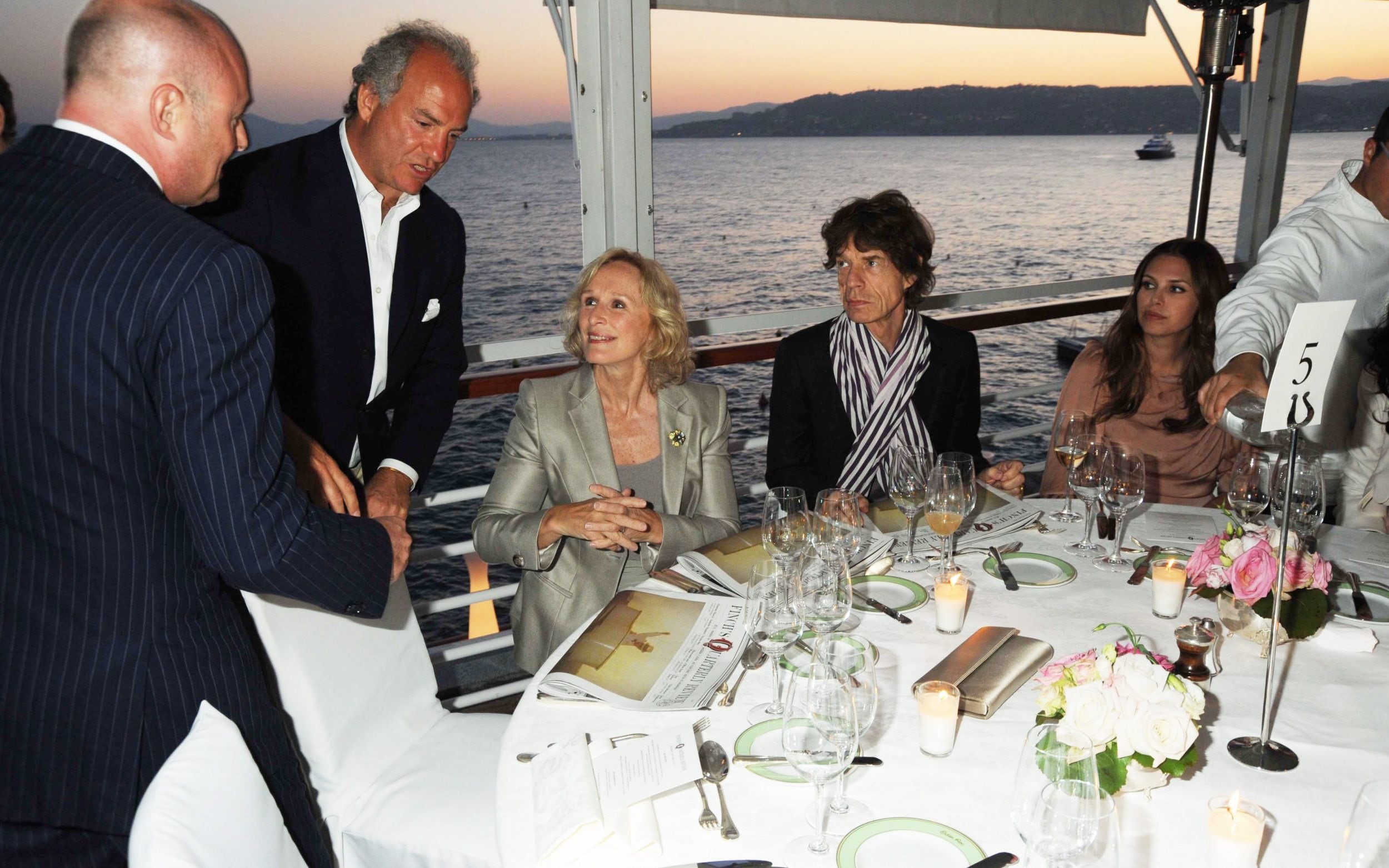
Charles Finch (left), Glenn Close, Mick Jagger and Dasha Zhukova pictured at Finch’s Quarterly Cannes Dinner in May 2010 - Getty Images/Dave M. Benett
“We didn’t have sponsors or anything like that back then, I didn’t let anybody in I didn’t know, and I didn’t allow drugs,” he says. “Although I don’t count marijuana as a drug. The big movie stars weren’t into drugs. Warren Beatty and Clint Eastwood and Robert De Niro and Al Pacino were not doing drugs. People want fame, but it is shocking how unpleasant fame can be.” He was also ruthless about other kinds of bad behaviour. “I don’t stand on ceremony,” he says. “If somebody behaves badly, I don’t care who they are, I’ll kick you out.”
Despite his glamorous client list, Finch soon realised what he was really interested in was brands. He worked with companies from Dior and Mulberry to Armani and British Airways. Eventually he started producing films and TV again. Today Finch & Partners, the PR and brand wing, is mostly run by his cousin, Claire Ingle-Finch, but you suspect Charles keeps an eye on things.
Speaking to Finch about his life, one gets a sense of yearning for a period when film stars still had mystery and good taste was not a matter of plugging a request into an AI chatbot. Partly, it was the medium. “Streaming or TV content brings you a certain amount of fame, but not mysticism,” he says. “But big-screen fame – [Brad] Pitt, [Tom] Cruise, [George] Clooney – that’s a whole other gig. You become almost like an exotic creature.
“For many decades, I have lived at the Beverly Hills Hotel when I’m in America. There’s a white-jacketed kind of beauty to that old world that is glamorous, and I really love that. Today everything is permissible. I was on a plane from Venice to London and there was a young woman across the aisle who was practically naked. I thought ‘this is insane’. There has to be some standard of social behaviour.” His first foray into hospitality was Chucs restaurant in Mayfair, which opened in 2014.
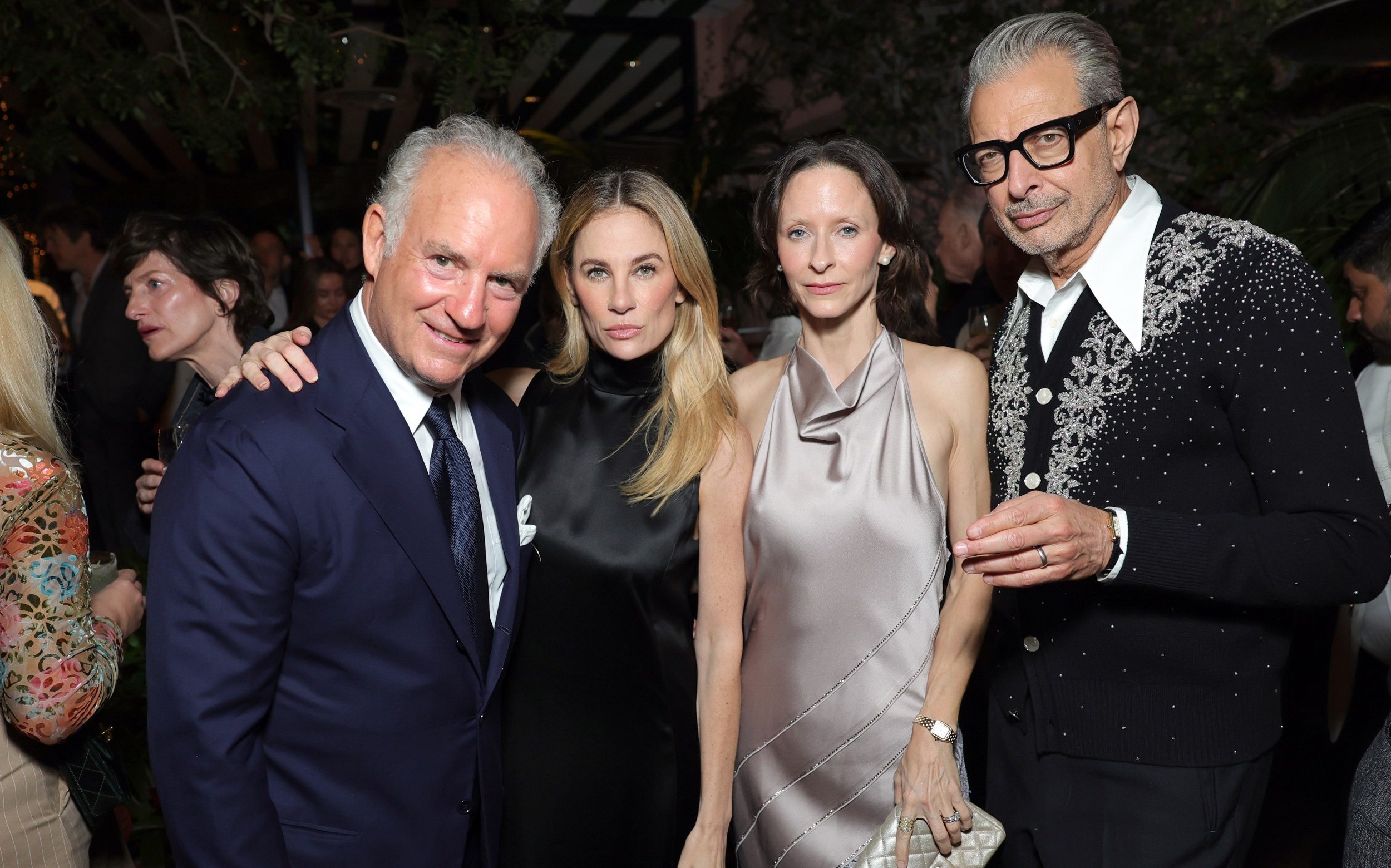
Charles Finch (left), Rebekah McCabe, Emilie Goldblum and Jeff Goldblum pictured at the Chanel and Charles Finch Pre-Oscar Dinner earlier this year - WireImage/Stefanie Keenan
At Bar Finch, he insists that customers remove their hats inside. “We’ve had some feisty responses,” he says. “But the hat thing winds me up.” He has not escaped a life in proximity to such luxury without a few indulgences of his own. He has owned classic cars over the years, but doesn’t have anything at the moment. “The Ferrari Scaglietti was an amazing car. I regret the day I sold her. Now I sort of pine for a Porsche 993 but they have gone crazy in price.” His main indulgence is his 23m 1953-built Sangermani sailing yacht. “It’s very bloody expensive,” he says. “Anyone who’s owned a classic boat doesn’t need to buy a Hermès bag.”
Apart from his polymath career, he has a 20-year-old daughter, Oona, who is about to start at drama school. He has been separated from her mother, his ex-wife, Sydney Ingle-Finch, for a decade, but they remain on good terms. “She is my best friend,” he says. “It’s as it should be. If you love somebody and you part ways and they’re the mother of your children, unless you hate each other, you should try to be civil. The French get that right, I think.” He is single, but not enjoying the process. “I find dating awful,” he says, slightly surprising considering the lustre of his address book. “I went on a dating process, but it’s difficult. I find modern dating a bit transactional.” It’s yet another way in which the past was better.
He could talk like this for hours, but he has a dozen plates to spin. As well as The Custom of the Country and the Rory Stewart project, Finch is developing a new TV show with George Clooney. Oh, and a Sir Kenneth Branagh project called Laird. Soon enough it will be awards season again. Beyond that, he doesn’t know. “Is that enough there, young man?” he says with a grin, the masterful people person relieved to be out of the spotlight again. “Go on, f—k off.”
Source: “AOL Entertainment”
